John Muir (1838–1914) changed the way humans saw and interacted with the natural environment, inspiring generations to appreciate and preserve the wild spaces of our planet. Born in Dunbar, Scotland, he spent his formative years exploring the rugged landscapes and lush forests that surrounded him, fostering a deep connection with nature. At the age of 10, his family moved to America, where he encountered a new and nearly untouched environment filled with vast forests, towering mountains, and dazzling rivers, which contrasted sharply with the confines of his upbringing under the strict rule of his religious zealot father. This early conflict influenced his later views on spirituality and nature.
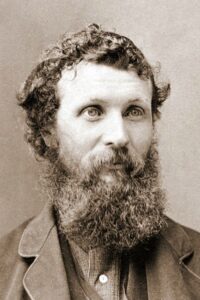
Once he came of age, Muir left the farm to seek knowledge, briefly attending university before embarking on what he termed “the University of the Wilderness,” an informal education steeped in the lessons of nature. After his famed “Thousand-Mile Walk to the Gulf,” which was both a physical and spiritual journey, he made his way to California’s grand Yosemite National Park, nestled in the heart of the Sierra Nevada, a place that would become synonymous with his name. Muir not only explored this breathtaking region, but he also worked tirelessly to promote its preservation. His passion for the great outdoors led him to travel to Alaska and abroad on many occasions, where he reveled in “God’s beauty,” diligently studying the trees and glacial landscape while advocating fervently for environmental conservation.
Muir’s efforts were instrumental in establishing national parks and raising awareness about the importance of protecting the natural world for future generations, echoing his belief that the wilderness can heal and inspire the human spirit.