
A distillery split in half by a geological fault, and the castle that controlled a country.
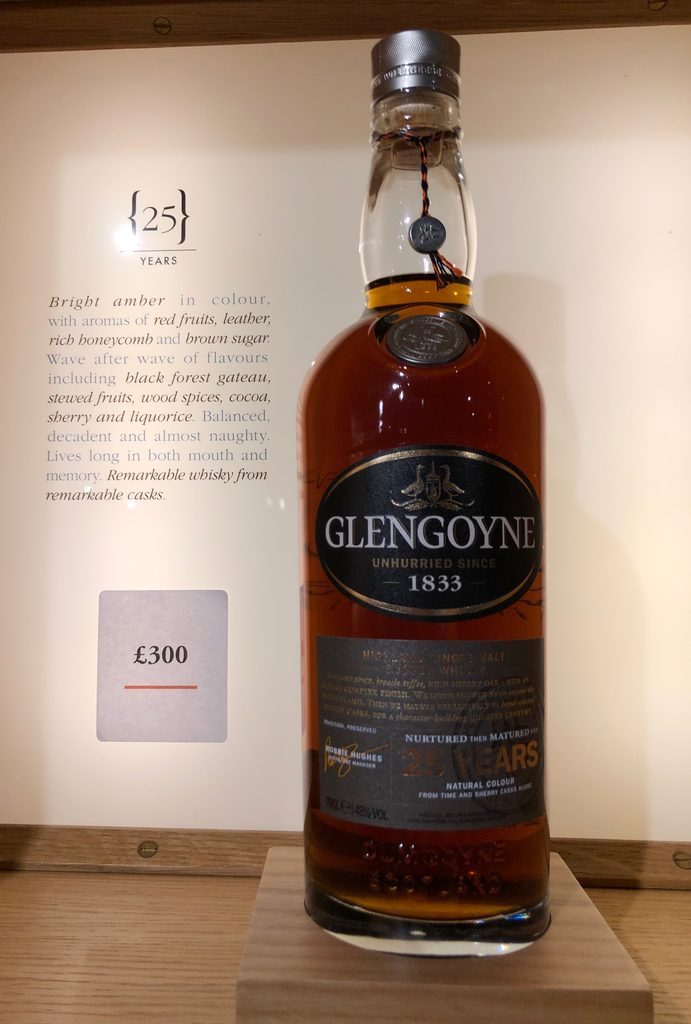
We leave the loch after breakfast. First stop is Glengoyne Distillery at Dumgoyne, where the still room smells of warm malt and oak. Then lunch, then Stirling Castle, and dinner and overnight at the Stirling Highland Hotel. Entrance fees are included.
A whisky made in two places at once
Glengoyne has been distilling since 1833, when it was licensed as Burnfoot. Its real peculiarity is where it stands.
The Highland Boundary Fault — the Highland Line — runs straight through the property, underneath the A81. The stills are on the Highland side. The warehouses, where the casks sleep for a decade or more, are across the road in the Lowlands. Glengoyne therefore distils a Highland whisky and matures it in the Lowlands, simultaneously, on one site, and has done for nearly two centuries.
It is hard to find a better physical image for the man we are following: made in one country, matured in another, never quite classifiable as either.
The hinge of Scotland
Stirling Castle sits on a volcanic crag above a bend in the Forth, at the point where the Lowlands narrow and the road to the Highlands begins. Whoever held it held the country’s waist. In 1297 William Wallace won the Battle of Stirling Bridge within sight of it.
From the walls you get the Lowlands on one side and the Highlands on the other — the same division that runs under the distillery floor, seen from above this time.
A question, if you are reading along: of the twelve days, which one was my favorite to walk?
Further reading: Glengoyne Distillery · The official John Muir Way
Twelve Days of the Walk — ← Day 3: Helensburgh, Where the Way Begins · Day 5: Falkirk Wheel – The Only Rotating Boat Lift in the World →
Related: Travels · The John Muir Way
Walk in the Footsteps of John Muir: Scottish Beginnings runs May 14–25, 2027. Sign-up closes Monday, February 15, 2027, and the group is capped at 34. Full details · Questions answered